
Why tree limbs pose a roofing risk in Rochester, NY
Tree limbs can damage a roof in several ways, from sudden impact during a storm to slow wear caused by rubbing branches, trapped moisture, and falling debris. The risk is higher when trees grow close to a house, extend over the roof, or have dead, cracked, or weakly attached limbs.
Rochester’s seasonal weather can add to the problem. Heavy snow and ice can increase the weight carried by branches, while strong winds, wet soil, and freeze-thaw cycles may make trees or limbs less stable. A branch does not need to break completely to create a roofing problem; repeated contact can gradually damage shingles and flashing.
What types of roof damage can tree limbs cause?
The damage depends on the limb’s size, fall distance, wind speed, and the part of the roof it strikes. Common problems include:
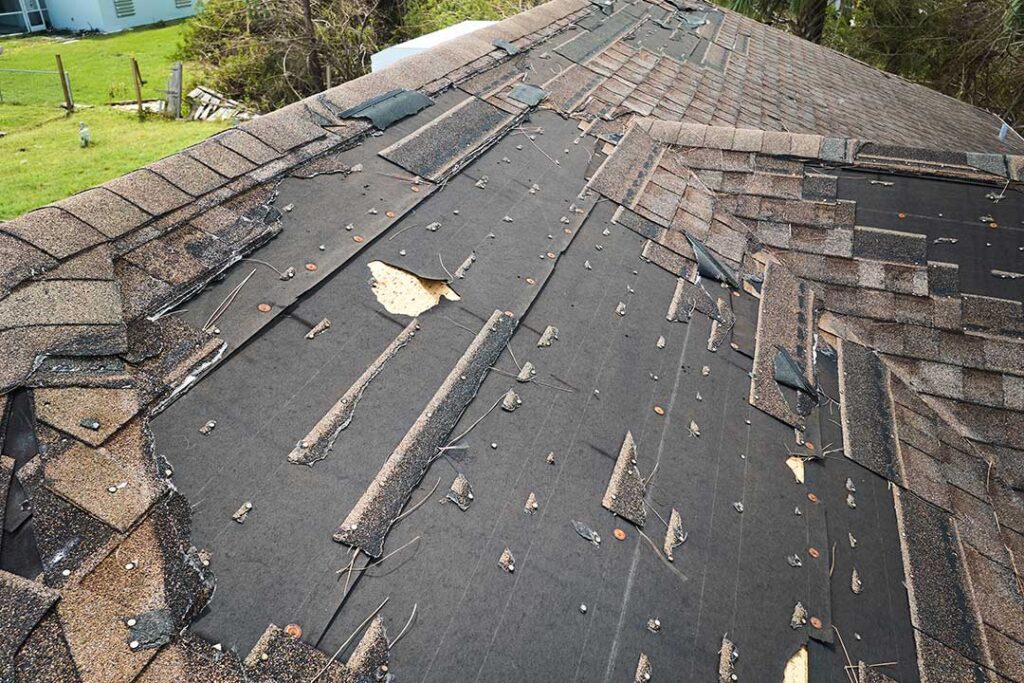
- Cracked, torn, or missing shingles
- Dents or splits in roofing materials
- Damaged flashing around chimneys, vents, skylights, or roof edges
- Punctures through the roof covering or sheathing
- Bent gutters and downspouts
- Broken soffits, fascia, or trim
- Damage to attic insulation or interior ceilings after water enters
A smaller branch may leave only surface marks, while a heavy limb can damage several roofing layers at once. Impact near a roof edge may also affect gutters and fascia even if the shingles appear intact.
Can branches damage a roof without falling?
Yes. Branches can cause gradual damage simply by touching the roof.
Wind-driven movement may cause a limb to scrape across shingles repeatedly. This rubbing can remove protective granules, loosen shingle edges, and expose the underlying material. Over time, the affected area may become more vulnerable to water, sunlight, ice, and temperature changes.
Branches that rest on the roof can also hold moisture against the surface. Leaves, bark, and small twigs may collect underneath, slowing drying and encouraging algae or moss growth. Moisture can also contribute to the deterioration of wood trim and other roof-edge components.
The damage is sometimes difficult to spot from the ground. A roof may look normal from the yard while individual shingles have been abraded or lifted by repeated branch movement.
Why are dead limbs especially dangerous?
Dead limbs are more likely to break because their wood has lost strength and may be affected by decay, insects, cracks, or previous storm damage. A dead branch can remain attached for a long time and then fall during high winds, heavy snow, or freezing rain.
Warning signs may include:
- Bare branches surrounded by healthy foliage
- Cracks or splits in the limb
- Loose or hanging branches
- Peeling bark or visible decay
- Mushrooms growing on the trunk or major limbs
- Branches that have recently shifted after a storm
- Large limbs resting against the roof or other structures
The safest response to a hazardous limb is not to climb onto the roof or attempt removal with household tools. Cutting a large, elevated, or tensioned branch can create serious risks to people, structures, and utility lines.
How do winter conditions increase the risk?
Snow and ice can turn a manageable branch into a heavy load. Wet snow is particularly dense, and freezing rain can coat branches with a thick layer of ice. The added weight may cause limbs to bend, split, or fall.
Winter weather also changes how damage appears. A branch may strike the roof during a storm, but water entry may not become noticeable until snow melts or spring rain reaches the damaged area. Ice can conceal cracked shingles, punctures, and damaged flashing for days or weeks.
After a significant winter storm, visible branches on the roof should be treated carefully. Walking on snow-covered or icy roofing is hazardous, and shifting debris can slide unexpectedly.
What should residents look for after a branch hits the roof?
A basic ground-level inspection can help identify obvious problems, but it cannot confirm that the roof is undamaged. Look for:
- Missing or displaced shingles
- Dark patches or exposed underlayment
- Freshly fallen roofing granules in gutters or near downspouts
- Sagging roof areas
- Bent gutters or detached downspouts
- Broken vent covers, chimney flashing, or skylight components
- Water stains on ceilings, walls, or attic framing
- Daylight visible through the roof deck from inside the attic
If water is actively entering, move furniture and containers away from the leak and protect the area from further interior damage. Avoid standing beneath unstable branches or entering an attic where the ceiling is sagging, since wet materials can become heavy and unsafe.
Does a small roof leak always mean a large repair?
No. A small leak may result from one damaged shingle, a loose flashing joint, or a minor puncture. However, the visible ceiling stain does not necessarily show where the water entered. Roof water can travel along sheathing, rafters, insulation, or framing before appearing indoors.
A leak that seems minor can also worsen during the next rain or freeze-thaw cycle. Water may reach insulation, wood framing, electrical components, or finished surfaces before the problem is fully visible. Prompt investigation is especially useful after a limb impact, even if the interior damage appears limited.
How can tree-related roof damage be reduced?
Preventive maintenance lowers the likelihood of branch contact but cannot eliminate all storm risk. Practical steps include:
- Keep branches from resting on or regularly rubbing against the roof.
- Remove dead, cracked, or weakly attached limbs before severe weather.
- Pay attention to branches near roof valleys, gutters, chimneys, and utility lines.
- Keep gutters clear so leaves and twigs do not trap additional moisture.
- Inspect roof edges and attic areas after major wind, snow, or ice events.
- Avoid storing ladders or equipment beneath unstable branches.
- Do not prune large limbs from a roof or near electrical lines without appropriate training and equipment.
Tree growth should also be considered over time. A branch that is safely separated from the roof today may reach it after several growing seasons. Trees near older homes may have expanded into spaces that were clear when the roof was installed.
Should branches be removed from the roof immediately?
Loose twigs and light debris may be removable from the ground with a suitable tool, but people should not climb onto a roof to retrieve heavy limbs, especially when the surface is wet, icy, steep, or damaged. A large branch may be under tension, and moving it can expose hidden punctures or cause additional breakage.
If a limb is touching electrical equipment, blocking an entryway, threatening to fall, or resting heavily on the roof, keep people away from the area until the hazard is controlled. Safety takes priority over checking every damaged shingle immediately.
Tree limbs are both a direct impact hazard and a source of slow roof wear. Regular observation of nearby trees, careful attention after Rochester storms, and prompt action when damage is visible can help prevent a minor branch problem from becoming a larger roofing and interior-water issue.
