
What should Rochester, NY homeowners check before hurricane season?
The most useful preparation is a careful inspection of the roof, drainage system, attic, and nearby trees before severe weather arrives. Hurricane-force winds are uncommon this far inland, but the remnants of tropical storms can still bring damaging wind, heavy rain, saturated ground, and falling branches to the area.
Begin with a ground-level inspection. Look for missing or displaced shingles, exposed underlayment, damaged flashing, sagging roof sections, clogged gutters, and branches that could strike the roof. Problems that seem minor during dry weather can become active leaks during wind-driven rain.
A roof does not need to experience direct hurricane conditions to suffer storm damage. Weak shingles, loose metal, deteriorated sealant, and blocked drainage can fail during a strong thunderstorm or the remnants of a tropical system.
How can you inspect a roof safely?
Most homeowners can identify warning signs from the ground, but climbing onto the roof is not necessary for routine preparation. Roof surfaces become especially dangerous when wet, and steep or aging roofs may have hidden weak areas.
Use binoculars to examine:
- Shingles that are lifted, curled, cracked, blistered, or missing
- Dark or irregular areas that may indicate exposed underlayment
- Flashing around chimneys, vents, skylights, and roof edges
- Loose or hanging gutter sections
- Damaged soffits, fascia, and roof trim
- Debris or moss that may conceal deterioration
Check the attic from inside the home as well. Look for daylight through the roof deck, damp insulation, water stains, musty odors, or darkened wood. A stain may reflect an older leak rather than current water entry, so it should be checked during or after rain if possible.
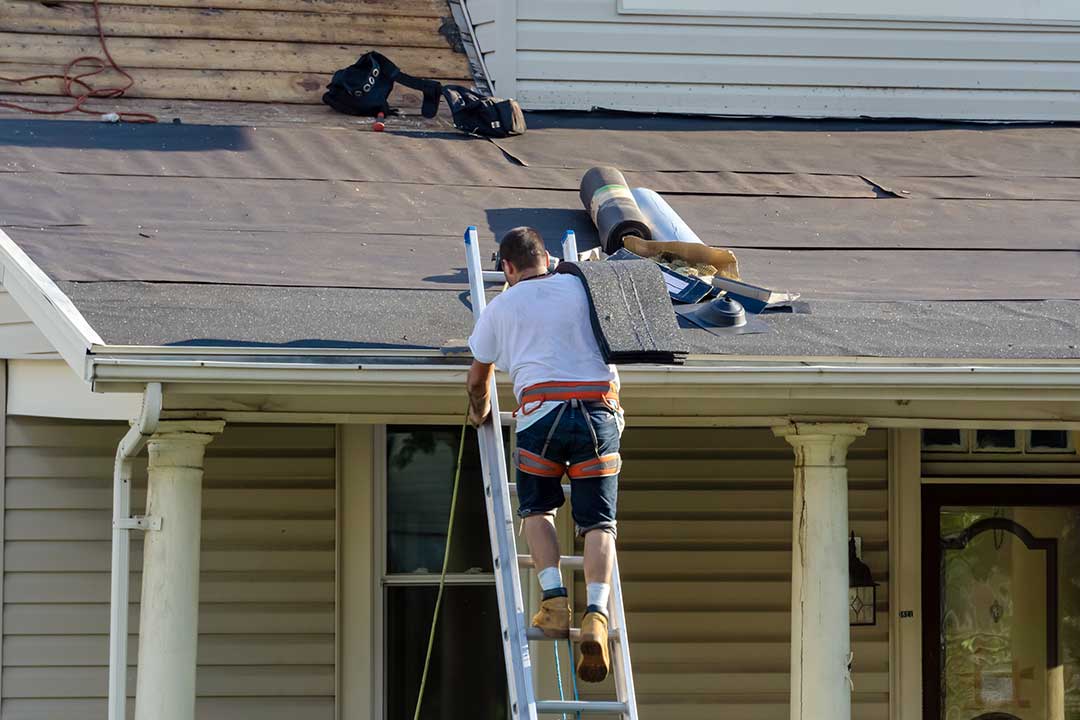
Avoid walking on the roof to inspect it. A damaged roof deck may not safely support weight, and loose granules or wet shingles can create a serious fall hazard.
Why do gutters and downspouts matter during a tropical storm?
Gutters and downspouts move large amounts of water away from the roof and foundation. If they are clogged or disconnected, water may overflow against fascia boards, enter at roof edges, collect near the foundation, or freeze later as temperatures fall.
Before the storm season becomes active:
- Remove leaves, twigs, and compacted debris from gutters.
- Confirm that downspouts are firmly attached.
- Make sure water exits several feet away from the foundation where practical.
- Check for sagging sections that hold standing water.
- Inspect gutter seams and end caps for leaking.
- Clear debris from lower roof areas and valleys.
Rochester’s mature trees and seasonal leaf fall can fill gutters quickly. A system that was clear in spring may need another inspection before late summer and early autumn storms.
Do not rely on gutter guards as a complete maintenance solution. They can reduce debris, but small leaves, seeds, and roof granules may still collect around edges or restrict water flow.
Which roof details are most vulnerable to wind and rain?
Roof edges and penetrations deserve particular attention because they are more exposed to wind and contain more joints than the main field of the roof. Loose shingles near eaves and rakes can allow wind to work underneath adjoining materials.
Inspect or monitor these areas:
Roof edges
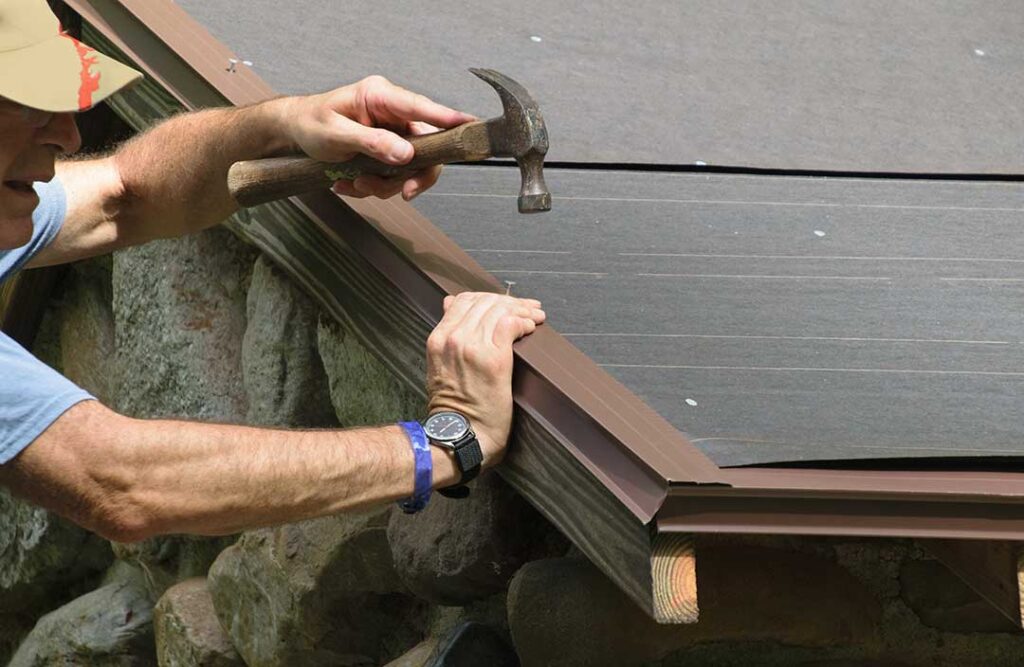
Missing drip edge, loose fascia, and deteriorated trim can allow wind-driven rain to reach the roof deck and wall assemblies. Edge materials should be secure and free from visible separation.
Flashing
Flashing directs water around chimneys, wall intersections, vent pipes, skylights, and other openings. Rust, gaps, lifted sections, or cracked sealant may indicate a potential leak path.
Sealant alone is not a substitute for properly installed flashing. Repeatedly adding caulk over a failing joint can hide the problem without correcting it.
Vents and roof-mounted equipment
Vent covers, pipe collars, and other penetrations should be intact and firmly attached. Damaged covers can admit rain, while deteriorated rubber collars may leak even when the roof shingles appear sound.
Shingles or other roof coverings
Do not assume that a roof is storm-ready simply because it is not visibly leaking. Wind can loosen materials before water enters the home. Pay particular attention to older areas, previous repair locations, and sections exposed to prevailing winds.
Should loose shingles or flashing be repaired before a storm?
Yes, visible damage should be addressed before severe weather if it can be done safely. A small opening may expand under wind pressure or allow rain to enter the attic and walls.
Temporary measures may reduce immediate exposure, but they are not permanent repairs. Covering an opening with a properly secured tarp can help limit water entry in an emergency, but roof access can be hazardous. Do not climb onto a roof during high winds, rain, or lightning.
If a roof has active leaking, major sagging, exposed decking, extensive missing materials, or structural damage, evaluation by a qualified roofing professional may be necessary for safety and proper repair. Emergency conditions should be handled without placing anyone on an unstable roof.
What should be done around the house before high winds?
Roof preparation also includes reducing objects that could strike the roof or block drainage. Walk around the property and secure or store loose items such as patio furniture, decorations, tools, containers, and lightweight outdoor equipment.
Trim dead or weakened limbs near the roof, but avoid attempting to remove large branches that are close to power lines or leaning over structures. Those conditions require specialized safety precautions.
Also check:
- Chimney caps and masonry for loose pieces
- Antennas, satellite equipment, and other roof-mounted items
- Fences or structures that could blow into the house
- Basement window wells and exterior drains
- Sump-pump operation if the property is vulnerable to heavy rain
- Indoor containers for collecting water if a leak develops
Keeping a flashlight, batteries, plastic sheeting, towels, and a camera available can make it easier to respond if water enters during a storm. Photographs taken before severe weather can also help document the pre-storm condition of the roof.
Do roof inspections need to happen every year?
An annual inspection is useful, especially for older homes, roofs with previous leaks, and properties surrounded by mature trees. A second ground-level check before the most active severe-weather period can identify new damage caused by winter ice, spring storms, or summer heat.
The age of the roof matters, but age alone does not determine whether it is safe. Installation quality, ventilation, maintenance, previous repairs, and exposure to wind and ice all affect performance.
A roof that has reached the later part of its expected service life deserves closer monitoring, particularly if shingles are losing granules, flashing is deteriorating, or leaks have occurred more than once.
What should homeowners do after a storm?
After the weather clears, inspect from the ground first. Look for missing materials, fallen branches, gutter damage, displaced flashing, and water stains inside the attic or upper rooms.
Do not assume the absence of visible indoor water means there is no roof damage. Moisture may remain above insulation or behind finished walls for some time.
If damage is suspected:
- Keep people away from sagging ceilings or visibly unstable areas.
- Place containers under active interior drips if safe.
- Move furniture and belongings away from water.
- Photograph damage before making non-emergency changes.
- Avoid walking on the roof or entering areas affected by downed electrical lines.
- Treat temporary coverings as short-term protection only.
Prompt attention can limit secondary damage to insulation, drywall, framing, and household belongings. Roof preparation is less about hurricane terminology than about identifying weak points before wind and heavy rain expose them.
