
What does roof pitch mean?
Roof pitch describes how steep a roof is. It is usually expressed as a ratio showing how many inches the roof rises vertically for every 12 inches it extends horizontally.
For example:
- A 4:12 roof rises 4 inches for every 12 inches of horizontal run.
- A 6:12 roof rises 6 inches for every 12 inches of run.
- A 12:12 roof rises 12 inches for every 12 inches of run, creating a 45-degree angle.
Roof pitch affects much more than appearance. It influences how quickly water and snow leave the roof, which roofing materials are appropriate, how much attic space is available, and how safely the roof can be accessed.
Why is roof pitch important in Rochester?
Rochester experiences four distinct seasons, including freeze-thaw cycles, periods of heavy rain, lake-effect snow, and occasional strong winds. A roof’s pitch helps determine how it responds to these conditions.
A steeper roof generally sheds rain and snow more efficiently. A low-slope roof may hold water or snow longer, placing greater demands on the roofing membrane, drainage system, flashing, and structural framing.
This does not mean that every steep roof performs well or that every low-slope roof is problematic. Design, materials, ventilation, drainage, installation quality, and maintenance all matter. Pitch is one part of the overall roofing system.
Which roof pitches are common?
Residential roofs commonly fall into several general ranges:
- Low-slope roofs: Less than approximately 3:12. These require specialized roofing systems because water drains more slowly.
- Moderate-slope roofs: Approximately 4:12 to 6:12. These are common on many houses and provide a practical balance between drainage, usable attic space, and construction cost.
- Steep-slope roofs: Approximately 7:12 and higher. These shed precipitation quickly but are more difficult and hazardous to walk on.
The same home may have more than one pitch. A main gable roof might have a moderate slope, while a porch, addition, dormer, or garage has a lower or steeper pitch.
How does roof pitch affect snow and rain?
A roof’s slope influences how long precipitation remains on the surface. Steeper roofs usually encourage snow and water to move downward, while lower slopes may retain them longer.
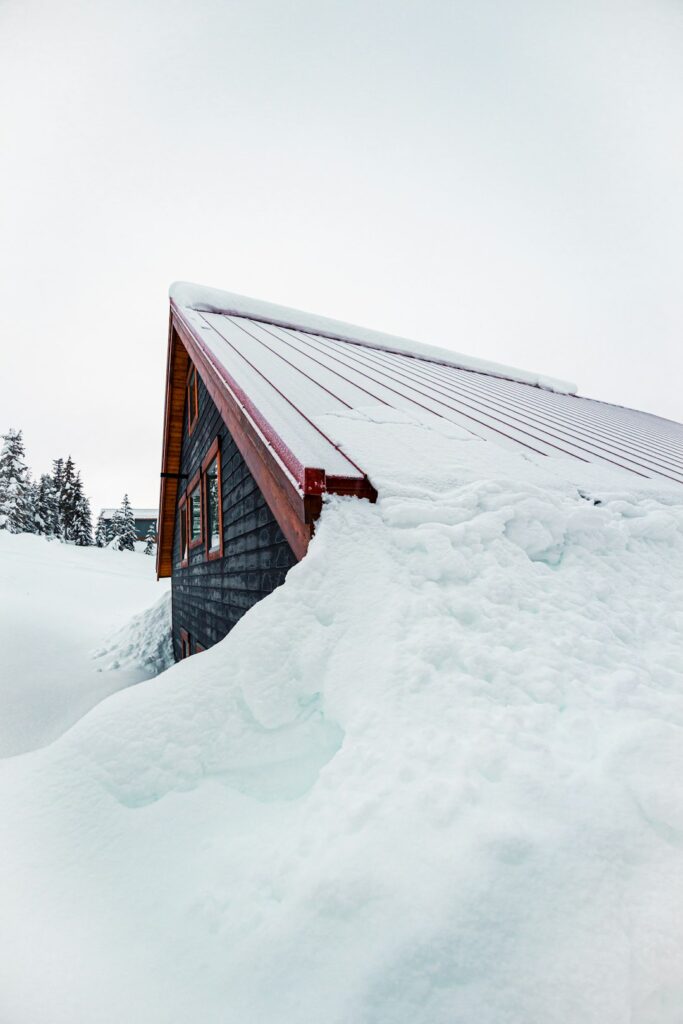
However, snow does not always slide off a steep roof. Rough roofing surfaces, valleys, roof projections, friction, ice formation, and snow guards can keep snow in place. A steep roof can also release snow suddenly, creating a hazard near entrances, walkways, vehicles, and lower roof sections.
Low-slope roofs depend more heavily on positive drainage. That means the surface must direct water toward drains, scuppers, or gutters without areas where water can remain trapped. Ponding water can contribute to membrane deterioration, leaks, staining, and added structural weight.
Ice dams are also influenced by more than pitch. They typically form when heat escapes into the attic, warms part of the roof, melts snow, and allows water to refreeze near colder eaves. Insulation, air sealing, attic ventilation, roof geometry, and weather conditions all play a role.
Does roof pitch affect roofing material choices?
Yes. Roofing materials have minimum recommended slopes because some systems depend on overlapping layers or visible seams to keep water out.
Asphalt shingles are commonly used on moderate- and steep-slope roofs. Their installation requirements change as the roof becomes flatter because water moves more slowly and may work beneath exposed joints.
Very low-slope sections often require a continuous roofing membrane or another system designed to handle slower drainage. Applying standard shingles to a roof that is too flat can increase the risk of water intrusion.
Metal roofing, synthetic materials, tile, and other systems also have pitch limitations and installation details. The correct choice depends on the material, roof design, underlayment, flashing, climate exposure, and manufacturer requirements.
A roof’s pitch should be considered before selecting replacement materials, especially if an addition or older section has a different slope from the main roof.
How can homeowners estimate roof pitch?
A roof pitch can be estimated from inside the attic without climbing onto the roof. Use a level, tape measure, and pencil:
1. Hold the level horizontally against a rafter or roof framing member.
2. Measure 12 inches along the level.
3. Measure vertically from that point to the underside of the rafter.
4. The vertical measurement is the rise.
If the vertical measurement is 6 inches, the roof is approximately 6:12. If the framing is covered or difficult to reach, pitch may also be estimated from accessible roof edges, building plans, or photographs, although these methods are less precise.
Roof pitch should not be measured by walking on a wet, icy, or visibly damaged roof. Even a moderate slope can be unsafe, particularly when the surface is covered with moss, frost, loose granules, or debris.
Does a steeper roof last longer?
Not necessarily. A steep roof may shed precipitation effectively, but durability depends on many interacting factors.
Important influences include:
- Quality and compatibility of roofing materials
- Proper underlayment and flashing
- Ventilation and moisture control
- Accurate installation
- Exposure to wind, trees, and falling branches
- Gutter and downspout performance
- Ice buildup and freeze-thaw movement
- Timely repair of small defects

A steep roof with poor flashing can leak, while a low-slope roof with excellent drainage and a properly designed membrane can perform reliably for many years.
Roof pitch may affect maintenance access as well. Steeper roofs are harder to inspect and clean safely, so problems around chimneys, valleys, skylights, vents, and roof-to-wall intersections can go unnoticed.
What roof-pitch problems should residents watch for?
The pitch itself usually does not change, but the roof may develop conditions that make its slope less effective. Warning signs include:
- Water stains on ceilings or upper walls
- Persistent dampness or musty odors in the attic
- Sagging roof lines or interior ceilings
- Standing water after rainfall
- Curling, missing, or damaged shingles
- Ice buildup along eaves
- Rusted or separated flashing
- Granules collecting heavily in gutters
- Snow accumulating unevenly because of poor insulation or roof geometry
A roof that appears to have adequate pitch may still drain poorly if gutters are clogged, valleys are obstructed, flashing is damaged, or the roof has settled.
How does roof pitch affect safety?
Steep roofs present a greater fall risk and often require specialized equipment for inspection or repair. Low-slope roofs may appear easier to walk on, but they can be slippery, fragile, or weakened by hidden moisture.
Winter conditions add extra hazards. Snow can conceal damaged surfaces, ice can make footing unpredictable, and frozen gutters can pull against roof edges. Snow sliding from a higher roof can also damage lower roofs or create dangerous conditions around the home.
For these reasons, roof-pitch questions are not only design questions. They also affect safe access, maintenance planning, snow management, and the type of inspection needed.
What should be considered before changing a roof’s pitch?
Changing roof pitch is a structural project, not simply a cosmetic alteration. It may affect rafters or trusses, attic ventilation, insulation, wall loads, drainage, exterior walls, and connections to adjoining roof sections.
Before changing the slope, property owners should consider local permitting requirements, structural design, runoff patterns, roof height, nearby roof intersections, and compatibility with existing construction. A change that improves drainage in one area can create difficult flashing or drainage conditions elsewhere.
Understanding pitch is useful even when no structural change is planned. It helps residents interpret roof inspections, compare repair options, recognize why different roof sections use different materials, and understand how seasonal weather affects the building.
