
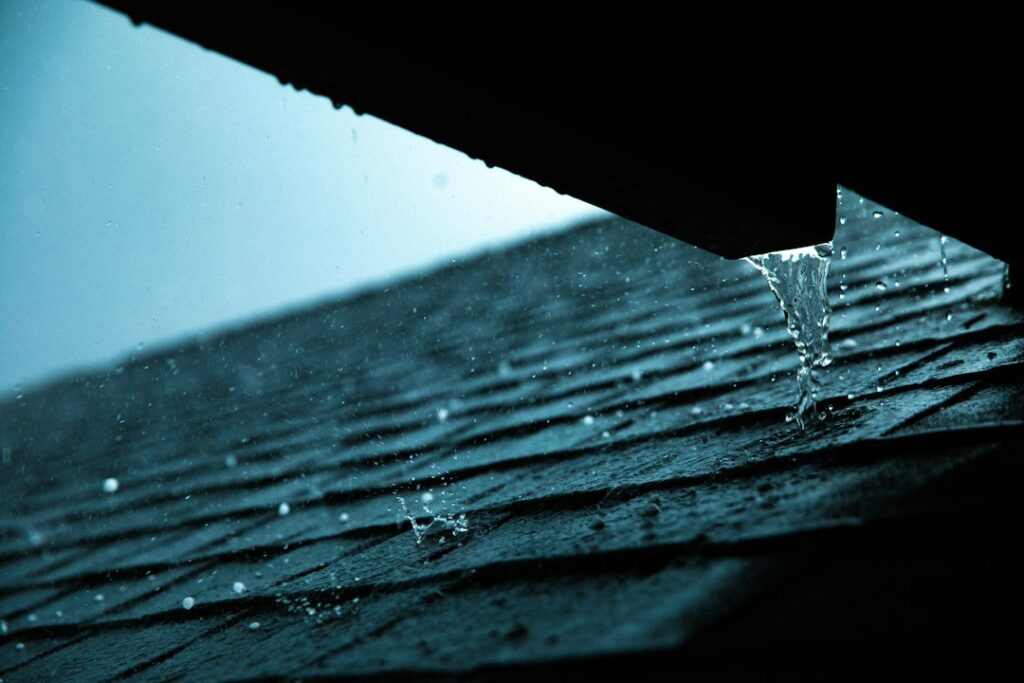
What does a roof drainage system do?
A roof drainage system moves rainwater and melting snow away from the roof, exterior walls, foundation, and walkways. Its main components are the roof slope, flashing, gutters, downspouts, extensions, roof drains, and the ground or drainage area where water is released.
Good drainage prevents water from collecting at roof edges or flowing directly beside the foundation. It also reduces the risk of stained siding, rotted fascia, basement dampness, soil erosion, ice buildup, and damage to landscaping.
In Rochester, NY, drainage systems must handle more than summer rain. Homes also experience heavy snow, freeze-thaw cycles, wind-driven rain, clogged leaves, and rapid snowmelt. A system that works during a light shower may still perform poorly during a long autumn rain or a warm spell after snowfall.
How should roof water be directed?
Roof water should be carried to a stable discharge point that keeps it away from the foundation and does not create a hazard. In most homes, that means gutters connected to downspouts with extensions or another approved method of dispersing runoff.
A downspout should not release water directly against the foundation wall. The outlet should direct water toward a lower part of the yard, a suitable drainage area, or another system designed to manage stormwater. The discharge point should not undermine soil, wash out mulch, create a slippery walkway, or send water onto a neighboring property.
Extensions need enough length to move water away from the building, but they should also remain secure and positioned so that lawn equipment, snow removal, and foot traffic do not damage them. Flexible extensions that collapse easily may offer little protection during heavy flow.
Water should never be directed into a sanitary sewer unless the connection is specifically permitted and designed for that purpose. Roof runoff and sanitary drainage serve different functions, and improper connections can contribute to backups or overloads.
How often should gutters and downspouts be cleaned?
Most homes benefit from checking and cleaning gutters at least twice each year: once in late spring and again after most leaves have fallen. Additional inspections may be needed when a property has mature trees, heavy debris, roof valleys, or nearby branches that drop leaves and twigs.
A basic inspection should look for:
- Packed leaves, shingle grit, nests, and standing water
- Gutters that sag or pull away from the fascia
- Loose, rusted, cracked, or leaking joints
- Downspouts blocked at the inlet or outlet
- Water marks below seams or behind gutters
- Soil erosion beneath the discharge point
- Ice buildup caused by restricted flow
Debris is not the only cause of blockage. Shingle granules, small pieces of roofing material, moss, and compacted organic matter can form dense plugs inside elbows and underground sections.
Cleaning should be done from a stable position, never by leaning beyond a ladder’s safe reach. Snow-covered roofs, icy surfaces, and steep slopes create serious fall hazards.
Why do roof slope and flashing matter?
Gutters cannot correct every drainage problem. Roof slope determines how quickly water reaches the edges, while flashing directs water around chimneys, walls, valleys, skylights, and other transitions.
Low-slope sections require especially careful detailing because water moves more slowly and may remain on the surface longer. Roof valleys receive runoff from two roof planes and can experience concentrated flow. If valley flashing, underlayment, or surrounding shingles are damaged, water may enter beneath the roof covering even when the gutter appears clear.
Flashing should lie securely, remain properly overlapped, and shed water onto the surface below rather than behind it. Common warning signs include damp attic insulation, dark roof-deck staining, peeling paint near ceilings, or water appearing after rain but not during dry weather.
A roof edge should also have a clear path into the gutter. Thick layers of roofing material, improperly installed edge metal, or sagging gutters can cause water to run behind the gutter and soak the fascia.
How should drainage be managed during winter?
Winter drainage depends on keeping water moving before it freezes. Gutters and downspouts should be clear before the first major snowfall, and downspout outlets should remain visible and unobstructed.
Snow and ice should not be chopped aggressively with tools that can damage shingles, flashing, or gutters. Removing snow from a roof can also create a fall risk and may damage the roofing surface if done improperly.
Ice dams form when melting snow refreezes near colder roof edges. They are often associated with heat loss from the attic, insufficient air sealing, inadequate insulation, or poor ventilation—not simply with a lack of roof heating cables. Improving the attic’s thermal performance is generally a more durable approach than treating only the ice at the roof edge.
Homeowners should avoid using salt or harsh deicing chemicals on roofing materials, gutters, plants, masonry, and concrete. These substances may corrode metal, harm vegetation, and damage exterior surfaces.

Are underground downspout drains always a good idea?
Underground drainage can be useful, but it is not automatically better than a visible extension. Buried pipes can become blocked, crushed, disconnected, or frozen. Their outlets may also be hidden by soil, mulch, snow, or landscaping.
An underground system should have a clear outlet and enough slope to move water away from the home. The pipe should be appropriate for exterior drainage, and its route should be considered before digging. A buried line that ends near the foundation simply moves the problem out of sight.
After installation, test the system with a hose and observe where the water exits. Check again during a heavy rain. If the outlet cannot be located or water backs up at the downspout, the system may need cleaning or repair.
What drainage mistakes are common?
Several problems appear repeatedly in residential roof drainage:
- Gutters are installed too level, so water sits instead of flowing toward the downspouts.
- Downspouts are too few for the roof area or are placed far from roof valleys.
- Short extensions discharge water beside the foundation.
- Gutters are fastened to deteriorated fascia that cannot support them.
- Roof runoff is concentrated onto a walkway, stairway, or narrow strip of soil.
- Underground outlets are buried or blocked by landscaping.
- Downspouts are disconnected during winter and never reattached.
- Roof drainage is directed toward a neighboring property.
- Gutter guards are treated as maintenance-free even though debris still accumulates on top or beneath them.
The correct solution depends on the roof shape, surrounding grade, soil, foundation condition, and existing stormwater arrangements. A drainage change that solves one problem can create another if it simply moves water toward a basement wall, retaining structure, or low point in the yard.
When should a drainage problem receive prompt attention?
Water intrusion after ordinary rainfall, repeated basement dampness, overflowing gutters, or a downspout that separates during storms deserves timely attention. So does visible erosion beside the foundation or water that remains pooled near the house for more than a short period.
More urgent conditions include sagging roof sections, large areas of ice, water entering electrical fixtures, ceiling staining that expands quickly, or drainage systems damaged by falling branches or heavy snow. These conditions may involve structural, electrical, or fall hazards.
For routine maintenance, the most useful practice is a seasonal inspection: check the roof edges in spring, clear drainage before autumn leaf fall, and verify downspout outlets before winter. In a climate with frequent rain, snow, and thaws, keeping water moving is one of the simplest ways to protect the roof and the rest of the home.
