
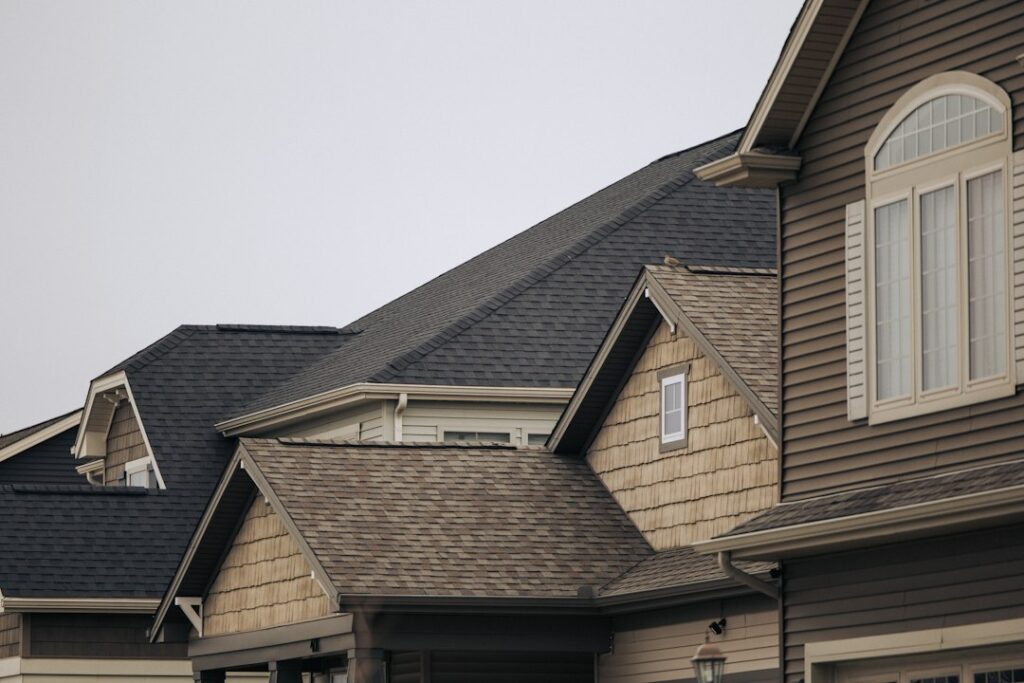
Choosing a roof color involves more than picking a shade that looks attractive in a sample. The right color should work with the home’s exterior materials, suit the surrounding neighborhood, handle seasonal changes visually, and remain appealing through years of weather exposure.
What should be considered before choosing a roof color?
Start with the parts of the home that are expensive or difficult to change. Roof color should coordinate with siding, brick, stone, trim, windows, doors, gutters, and other permanent features.
A useful starting point is to identify the home’s dominant exterior color. A roof does not need to match that color exactly, but it should share a compatible undertone.
For example:
- Warm siding often works well with brown, tan, weathered wood, or certain muted red-brown roof tones.
- Cool siding may pair better with charcoal, slate, gray, or blue-gray tones.
- Brick homes usually benefit from a roof color that picks up one of the less noticeable colors in the brick rather than matching the most prominent shade.
- White, cream, and light gray exteriors offer more flexibility but can look very different depending on whether the roof color is warm or cool.
Permanent materials deserve priority over temporary decorations. Flower boxes, seasonal decorations, and paint colors that may change later should not control a roofing decision as strongly as brickwork, masonry, or established siding.
Is a dark or light roof better?
Neither is automatically better. Dark and light roofs create different visual effects, and the best choice depends on the home’s proportions, exterior colors, and surroundings.
A dark roof can make a large or tall house appear more visually grounded. Charcoal, deep brown, and other darker blends often create a traditional appearance and can help define a roofline on homes with light siding.
A light roof may make a smaller home feel more open and can reduce the visual weight of a large roof surface. Lighter gray, beige, and blended weathered tones may also complement homes with pale siding or natural stone.
Roof color does not usually transform indoor temperature by itself. Attic ventilation, insulation, roof design, shade, and the roof material have a much greater effect on comfort and energy use. Color can influence heat absorption, but it should not be treated as a substitute for proper attic performance.
Which roof colors work well with Rochester homes?
Homes in Rochester often include older wood-frame houses, two-story residences, ranch-style homes, brick exteriors, and additions built during different periods. Because roof shapes and exterior materials vary widely, there is no single color that suits every property.
Neutral blends are often practical because they coordinate with changing exterior paint colors and varied neighborhood architecture. Gray, brown, charcoal, and weathered combinations tend to remain visually adaptable over time.
A few common pairings include:
- White or light siding: charcoal, medium gray, weathered gray, or a balanced brown blend
- Gray siding: charcoal, slate, black-gray, or a muted brown-gray blend
- Beige or tan siding: brown, weathered wood, warm gray, or muted charcoal
- Blue or blue-gray siding: slate, cool gray, charcoal, or a restrained black blend
- Red or brown brick: dark brown, charcoal, gray-brown, or a color that repeats a subtle masonry tone
- Natural stone accents: gray, brown, taupe, or a blended roof color that does not compete with the stone
The goal is visual balance. If the exterior already includes several strong colors, a quieter roof may create a more cohesive appearance.
How does roof color affect the apparent size of a house?
Roof color can change how a home’s proportions are perceived. A high-contrast roof tends to draw attention to the roofline, while a closer match between the roof and exterior can make the overall structure feel more unified.
A dark roof paired with very light siding creates a strong outline. This can look crisp, but it may also make the roof appear more prominent. A roof color closer to the siding usually creates a softer transition.
On homes with multiple roof sections, a highly contrasting color may emphasize every slope, dormer, and addition. A blended or moderately contrasting color can make a complex roof design appear less visually busy.
This is especially useful when reviewing homes with enclosed porches, rear additions, attached garages, or several roof pitches. The more complicated the roof shape, the more noticeable the color pattern may become.
Should the roof match the trim, siding, or gutters?
The roof does not need to match any single element exactly. Coordination usually looks more natural than exact repetition.
Matching the roof to the trim can create a strong, traditional appearance, but it may also produce too much contrast if the trim is very bright. Matching the roof to the siding can make the home look calm and unified, although an exact match may flatten the exterior.
Gutters and downspouts are usually best treated as supporting elements. They can match the trim, siding, or roof depending on which approach makes them less visually prominent. Their color should not be the main factor in selecting the roof.
For homes with metal flashing, vents, chimneys, or other roof penetrations, remember that these details may remain visible regardless of the shingle color. A roof design should still look balanced when viewed from the street, especially during leafless seasons.

How should seasonal weather influence the decision?
Rochester’s long winter season, freeze-and-thaw cycles, rain, wind, and summer sun can make a roof look different throughout the year. Roof color should be judged in more than one season if possible.
Snow can temporarily cover much of the roof, leaving only edges, ridges, and visible slopes. Against a white winter background, very dark roofs may appear especially prominent. In summer, surrounding trees and bright sunlight can make the same roof appear lighter or warmer.
Debris and staining can also be more noticeable on certain colors. Light roofs may show dark organic marks, while very dark roofs may show pale dust, salt residue, or areas of uneven weathering. A multi-tone blend often disguises minor visual variation better than a solid-looking color.
Color cannot prevent moss, algae, or staining. Roof slope, shade, moisture, ventilation, and nearby vegetation are more influential. However, the appearance of those conditions should be considered when comparing very light, very dark, and heavily blended options.
Why can a roof sample look different on the house?
Small samples can be misleading because roof color is viewed across a much larger surface in changing light. A color that looks subtle in a hand-sized sample may appear much darker or more noticeable across an entire roof.
Before deciding, review the color:
- In direct sunlight
- Under overcast skies
- From the street
- Near the home’s siding and trim
- Against masonry or stone
- Beside existing gutters and exterior fixtures
Granules, shadow lines, and color variation can also change the appearance. Two roof products described with similar color names may look noticeably different because of their blend patterns and surface texture.
A digital rendering can help with general comparison, but it should not be treated as an exact preview. Screen settings, photography, and image processing can alter colors. Physical samples viewed outdoors are generally more useful.
Are there neighborhood or property restrictions?
Most roof color decisions are aesthetic, but certain properties may have additional rules. Restrictions can apply in planned communities, historic areas, condominium settings, or neighborhoods with recorded appearance requirements.
Before selecting a color, review applicable property documents and local requirements. A roof replacement may also involve rules related to permits, materials, ventilation, or installation rather than color alone.
For an ordinary residential property, the practical questions are usually whether the proposed material meets current requirements and whether the appearance fits any neighborhood-specific restrictions.
What is the safest long-term choice?
A roof color with moderate contrast and a balanced blend is often the easiest to live with over time. It can work with future changes to paint, doors, landscaping, and exterior fixtures without forcing every update to match the roof.
That does not mean the safest choice must be bland. A carefully selected charcoal, weathered brown, slate, or mixed neutral can provide character while remaining adaptable.
The strongest decision usually comes from comparing the whole exterior rather than focusing on a single color swatch. Consider the home’s permanent materials, roof shape, street visibility, seasonal conditions, and the way the color looks at a distance. A roof should complement the architecture first and follow short-term design trends second.
